Pájaro Valley School District - Climate Stories
We said pick any environmental story. They chose water.
By: Juliano Calil
Posted:
Pájaro Valley Climate Stories is a student environmental storytelling program, created with PVUSD, Watsonville High teacher Daniel Johnston,
the Center for the Study of the Force Majeure at UCSC, and Virtual Planet Technologies.
We asked a class of juniors at Watsonville High to pick any environmental story they wanted. Most of them picked water. Here are their photos and the few lines they wrote.
We gave them one instruction and not much else: find an environmental issue that matters to you, here in the valley where you live. Take a photo. Write a few lines about why it matters and what you'd want to happen here.
Six teams completed the assignment: phone photos and videos, a sentence or two of writing, nothing polished. A couple of groups reached first for the big abstract version of climate change before circling back to their own street. That's fine. That's where the work starts.
Four of the six went straight to water. The 2023 flood, or the coast. It's a small sample, but when we asked these kids what's wrong with the world around them, a lot of them pointed at the river that came over the levee, or the ocean they watch change from the beach.
One: The water left. The problem didn’t.
Three teams covered one event: the March 2023 Pájaro River levee break that put the town under brown water. The strongest piece of writing came from Kassy, Alexa, and Lily:
“The storm swallowed the neighborhood overnight, turning driveways into rivers and leaving families to be forcefully evacuated. By morning the floodwaters were slowly pulled back, revealing the mud, debris, and damage the community would now have to rebuild from — together.”
— Kassy R., Alexa M., Lily R
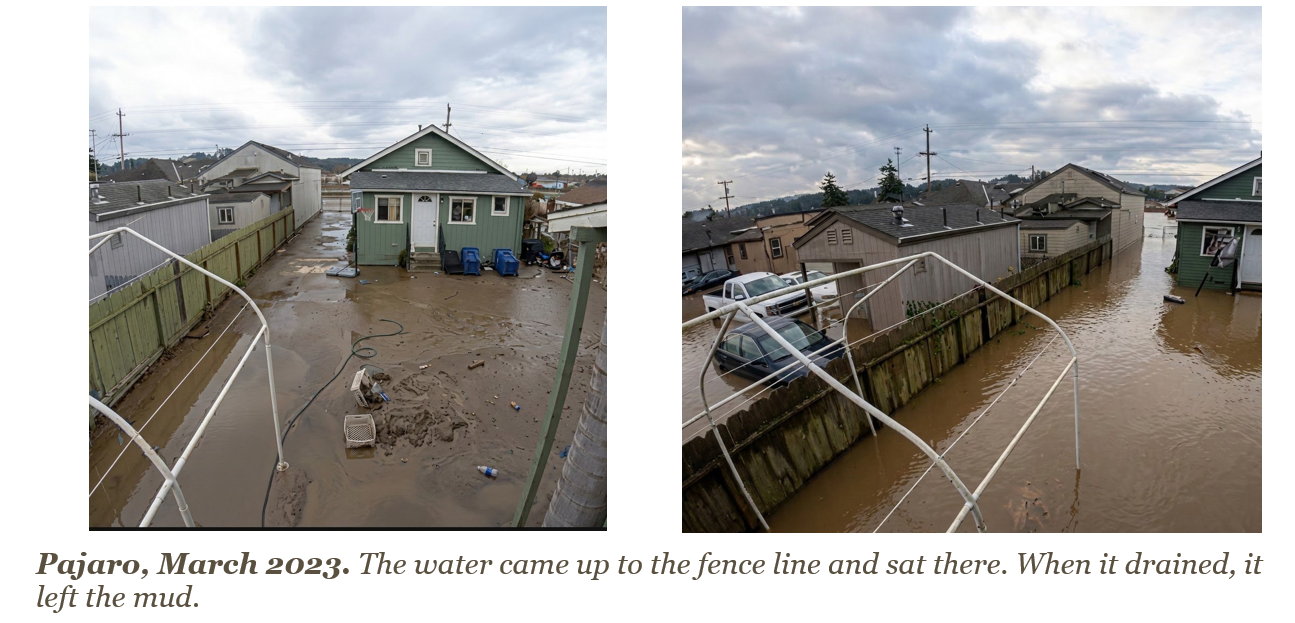
"Swallowed overnight" and then "pulled back together" is a real piece of storytelling. They gave it a beginning, a worst moment, and the day after. Most adults writing about floods lead with rainfall totals. These three led with families being moved out in the dark and a town waking up to clean up, together. That's the instinct we're trying to grow.
A second team went up the river itself. Edwin, Osvaldo, Fernando, and Sam made the point that matters most around here:
On the Pájaro River
“After 3 years of the Pajaro, CA flooding there’s some people still facing problems due to the flooding, and I hope for the future the community could do something to improve the living quality.”
— Edwin, Osvaldo, Fernando, Sam
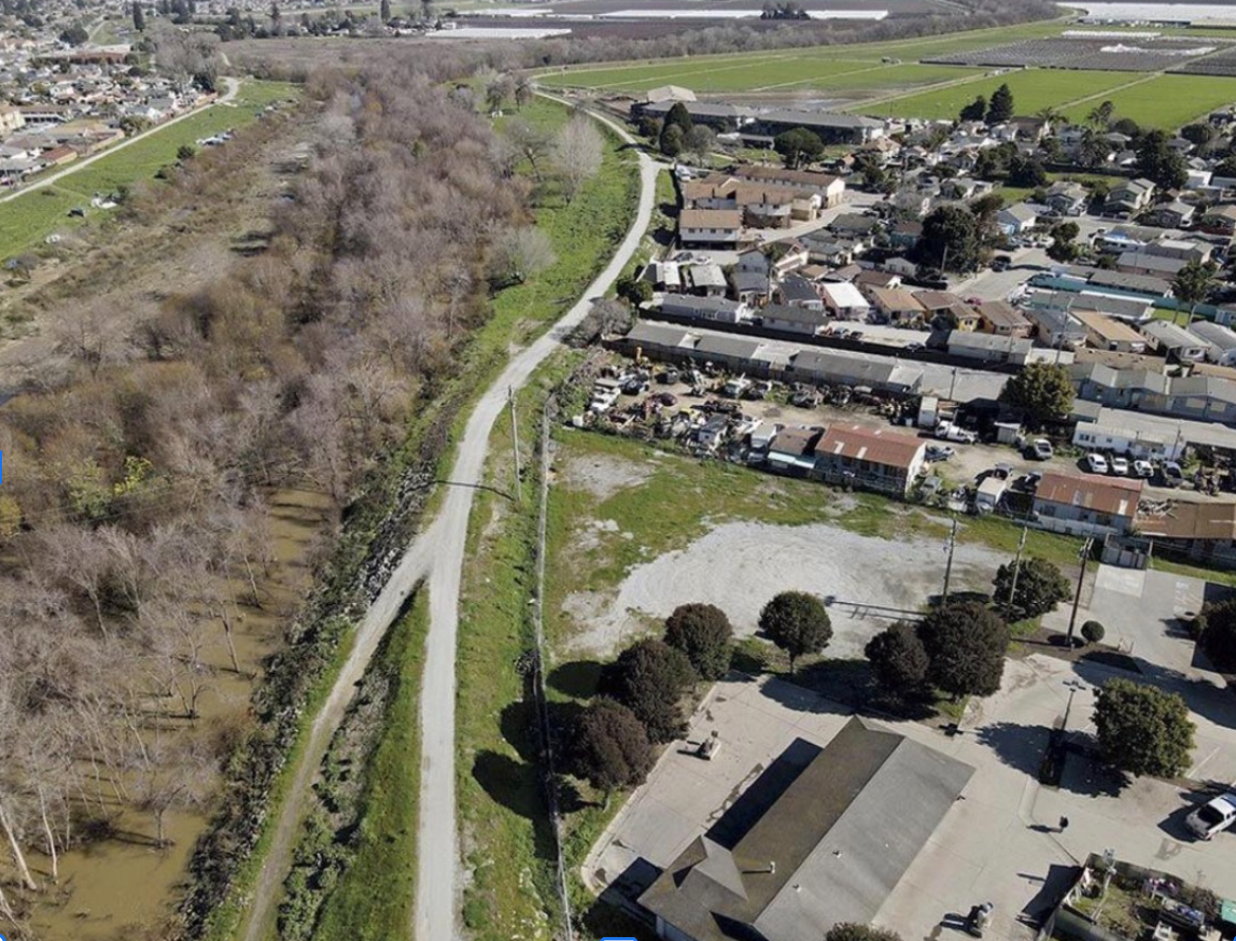
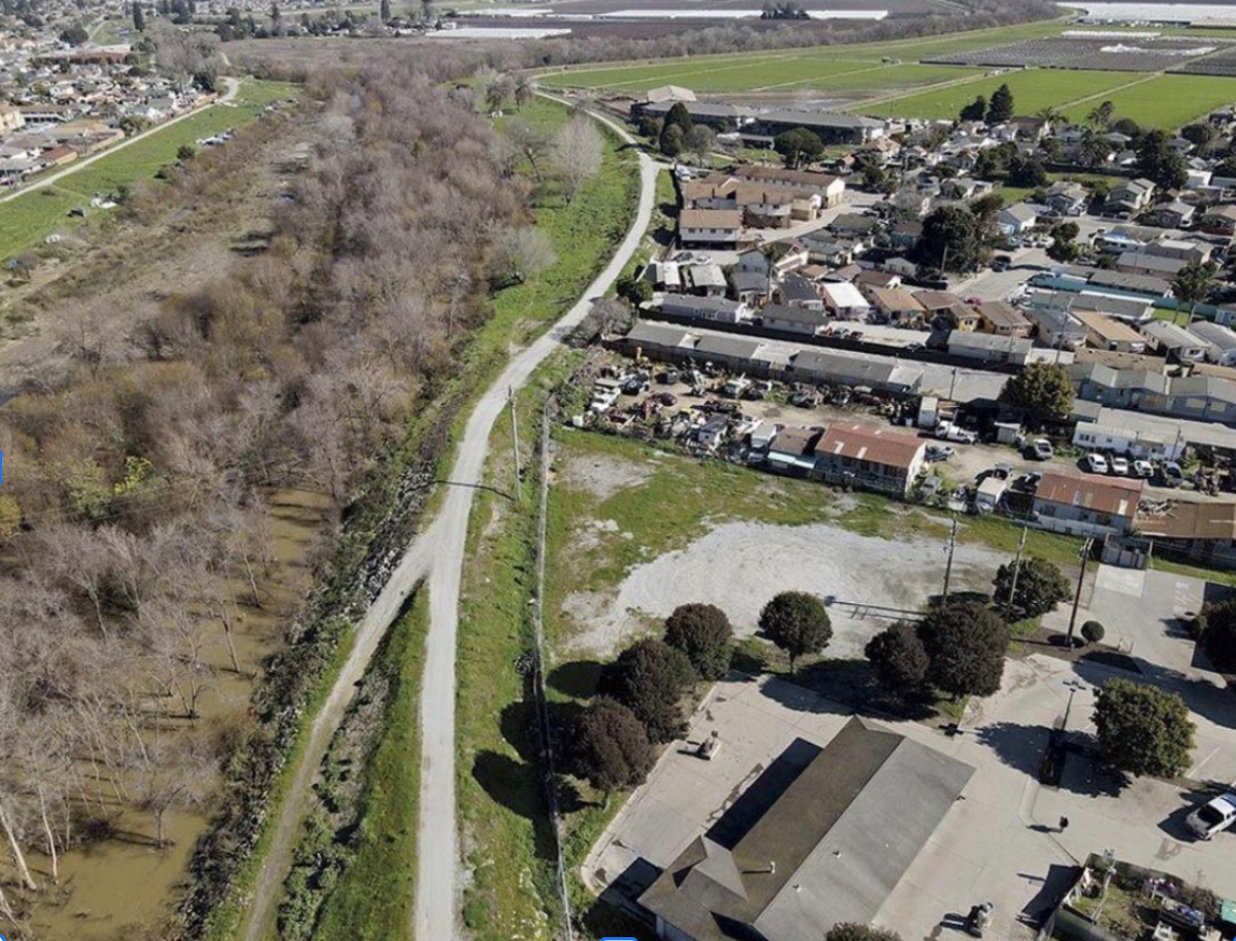
The geography in one frame. The river and its levee on the left, the houses on the right, the fields beyond. The flood story is written into the layout of the town itself.
"After 3 years"... The news trucks left in 2023. The water level on the wall is gone but the families they're talking about are still sorting it out. A fourteen-year-old named the part of the flood story that doesn't make the headlines: what happens after the water leaves.
The third team, Angel Hernandez, Carlos Marcial, and Manuel Sanchez, kept it close to home. They pinned it to an address on Salinas Road and to the two things a flood actually takes.
Salinas RD
“I think the flooding impacted many families in many different ways — like their homes, and even their work.”
— Angel Hernandez
Homes and work. In Pájaro that’s not two losses, it’s one. The water hit the houses and the fields in the same week, and a lot of families depend on both. Angel got there in one sentence.
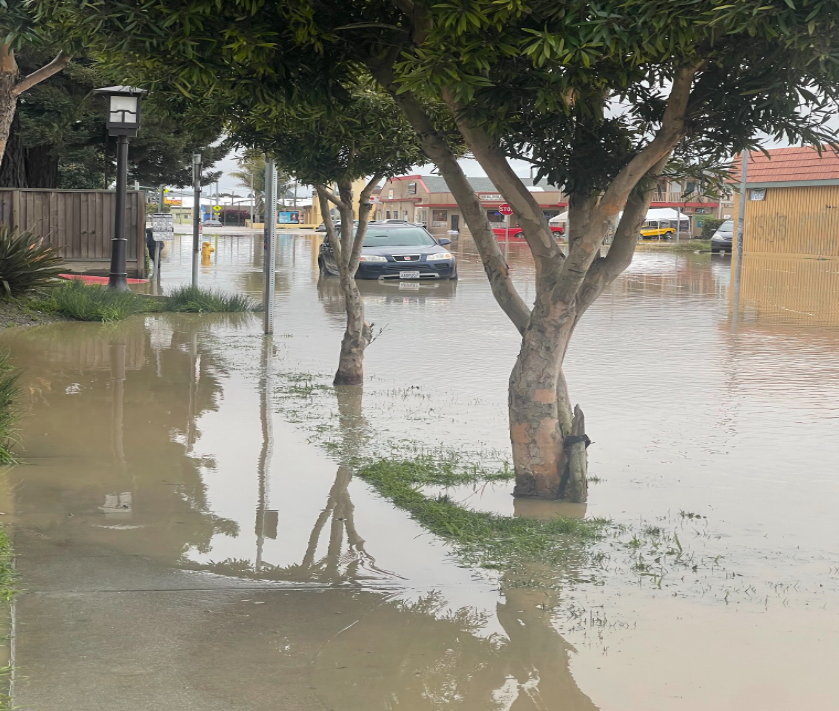
A street, not a statistic. Homes and work — in a valley where a lot of families’ work is the fields that flooded too.
Two: The coast
One team watched it take. Another watched it give. Two teams went to the ocean and noticed it isn’t sitting still.
Angel S., Bernie A., and Juan J. went down the coast: Asilomar, the Monterey Bay Aquarium, Moss Landing, considering sea level rise. Two of their three lines reach for the global version: melting poles, Venice sinking. Then Bernie wrote this, and it placed a clear image in my mind.
“The water rising is starting to cover the rocks where sea otters sit — so it’s destroying the ecosystem, and eventually they’ll have to migrate.”
— Bernie A
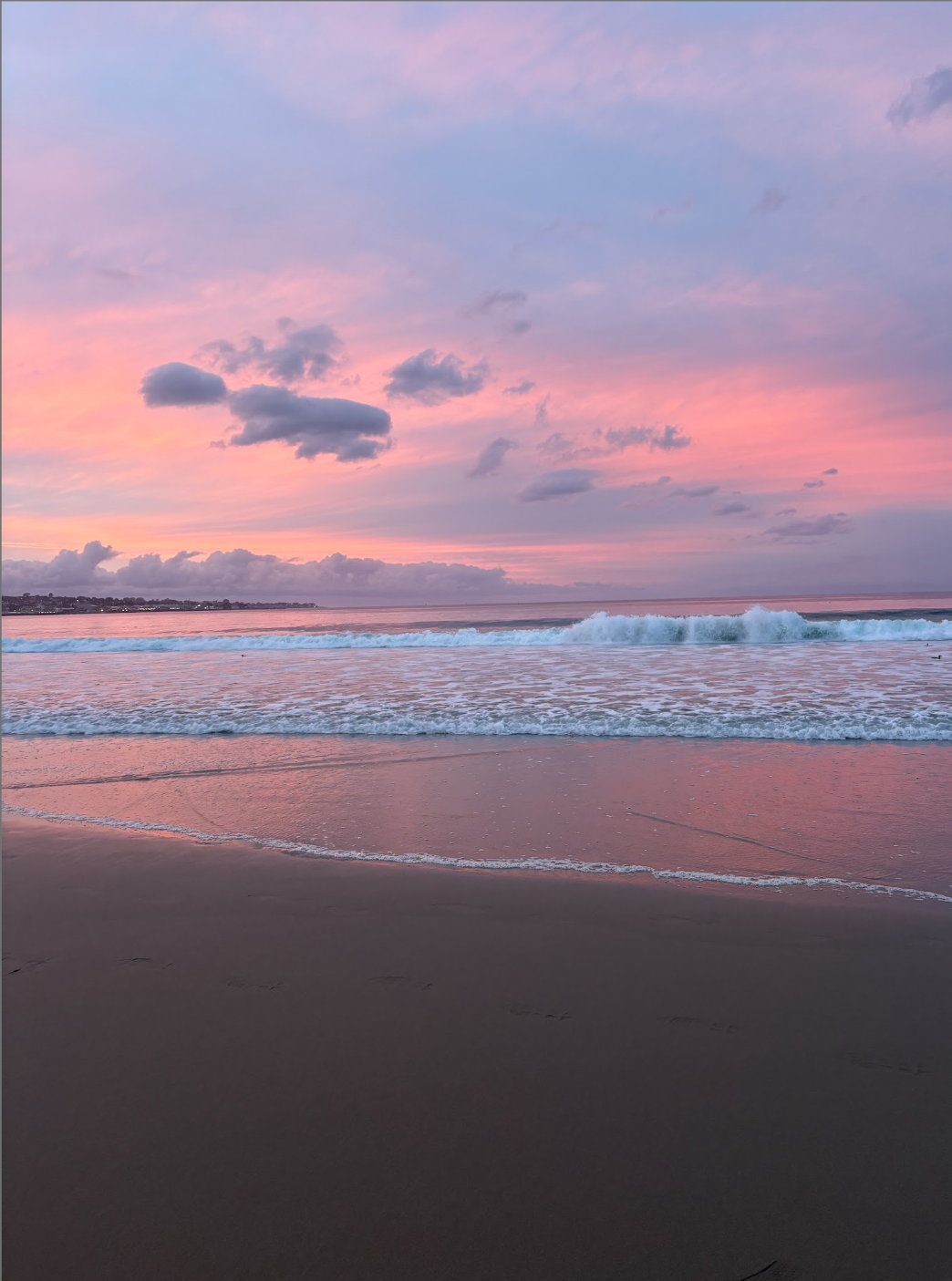
Monterey Bay at dusk. Same shoreline the otters are getting pushed off of, a few miles north.
Bernie found a real story: an otter sitting on a rock that is slowly running out of room. That's how you turn data into something people remember. "The ice in the poles" is real, but it is hard to relate to. "The rocks where the otters sit" gives the problem a place and a character. Suddenly, sea level rise isn't happening somewhere else. It's happening to something you can see.
Then there's Leilani, David, Roberto, Jimena, and Chris, who noticed the coast moving in the other direction.
West Cliff Drive
“A couple of years ago this was not a beach at all. It used to be just a cliff with a view. Today there’s sand — a smooth, even area you can set foot on and walk.”
— Leilani, David, Roberto, Jimena, Chris
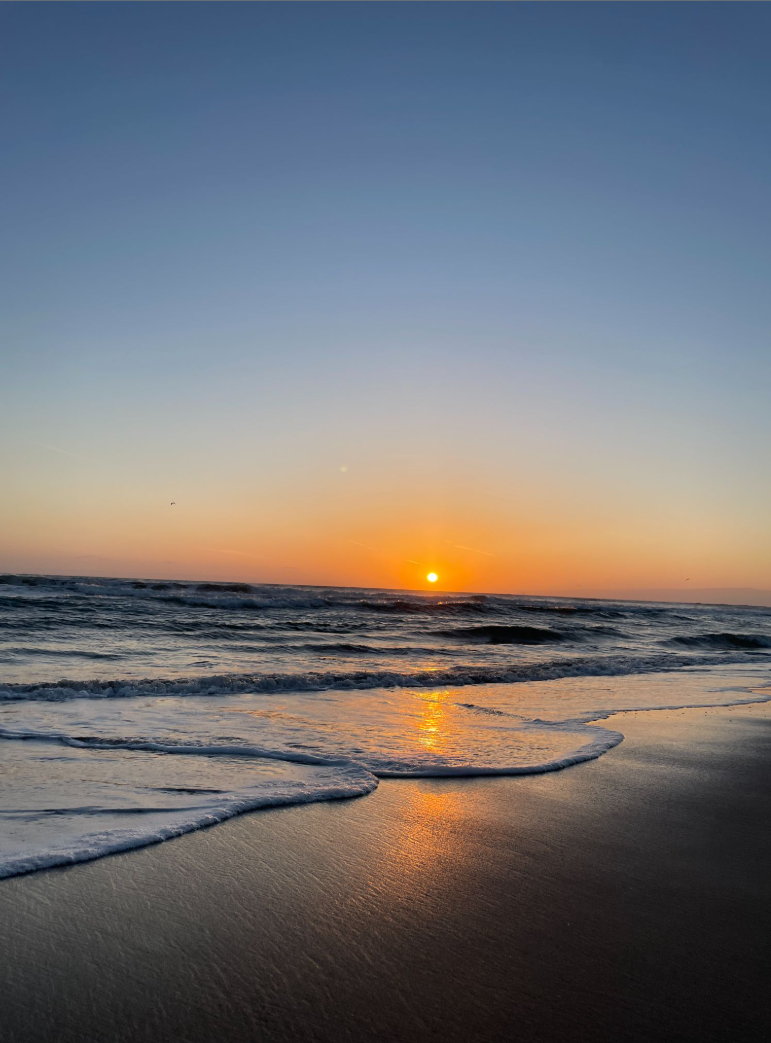
West Cliff, Santa Cruz. Sand where they remember a cliff. The coast moves both ways, and they caught it moving.
Coastlines shift sand around for a lot of reasons, and at this stage, proving exactly what happened isn't really the point. That a group of teenagers looked at a place they pass all the time and noticed it used to be different. They were paying attention.
Three: Pinto Lake
The place they actually go. The one team that didn’t pick a flood picked the spot where they spend many Sundays.
Aubrey, Fabian, Madisyn, and Anthony went to Pinto Lake, and their story works because they know the place. Aubrey pointed to the pollution. Anthony named the cause plainly: people fishing, hiking, and not always cleaning up after themselves. Madisyn did something more personal. She measured the change since she was a child:
When I was little there was so much wildlife — so many ducks. Now it’s full of trash and barely any wildlife.
— Madisyn
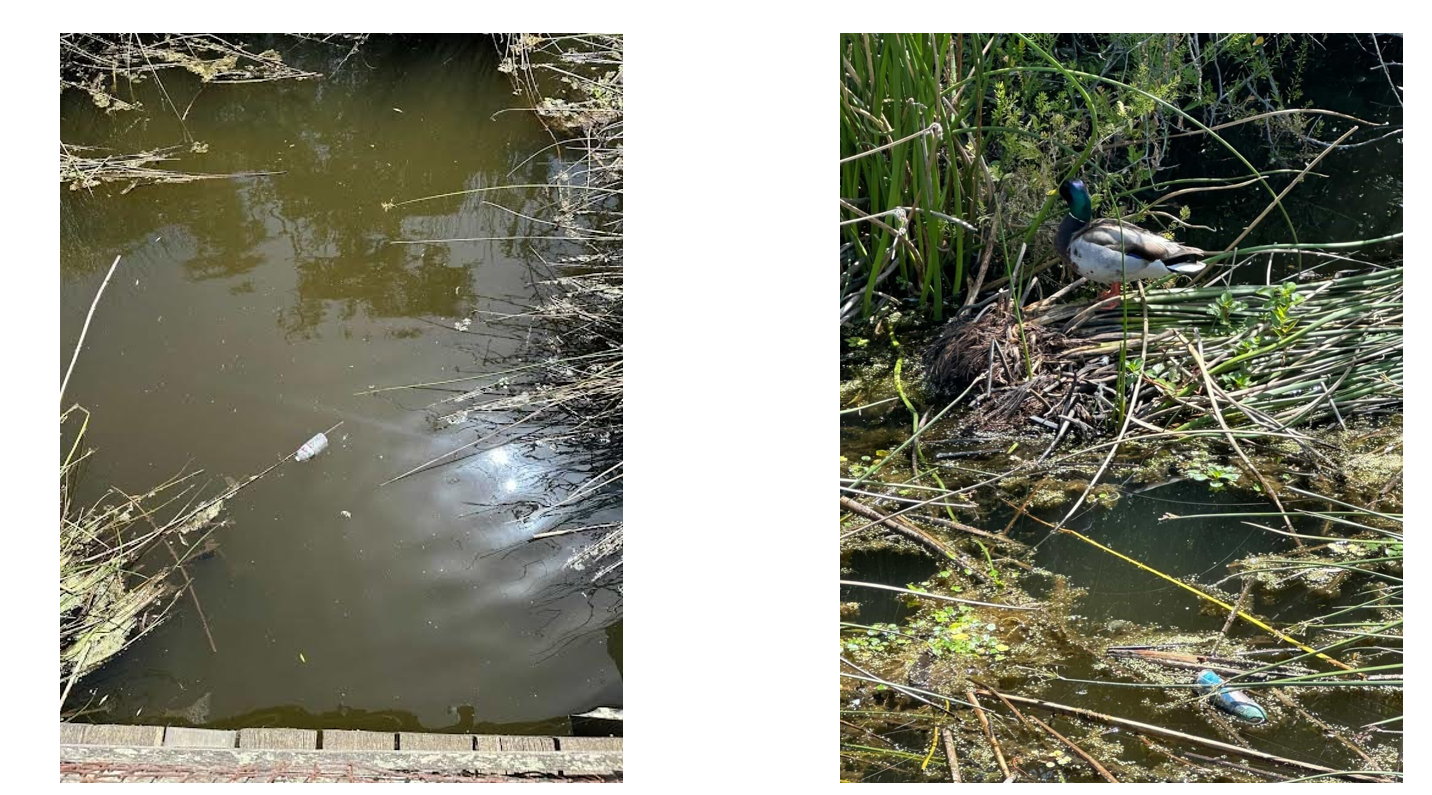
Pinto Lake. A cup in the reeds. A duck nesting in the trash line. The wildlife and the litter sharing the same water.
And then Fabian wrote the line that tells you why any of this is worth doing:
The Pinto Lake Pitch
“This place is where most kids, play every Sunday. Recently me and my friends have been coming and playing daily on the Pinto Lake pitch. I believe in keeping it clean and picking up after one another — to keep it ready for the next game.”
— Fabian
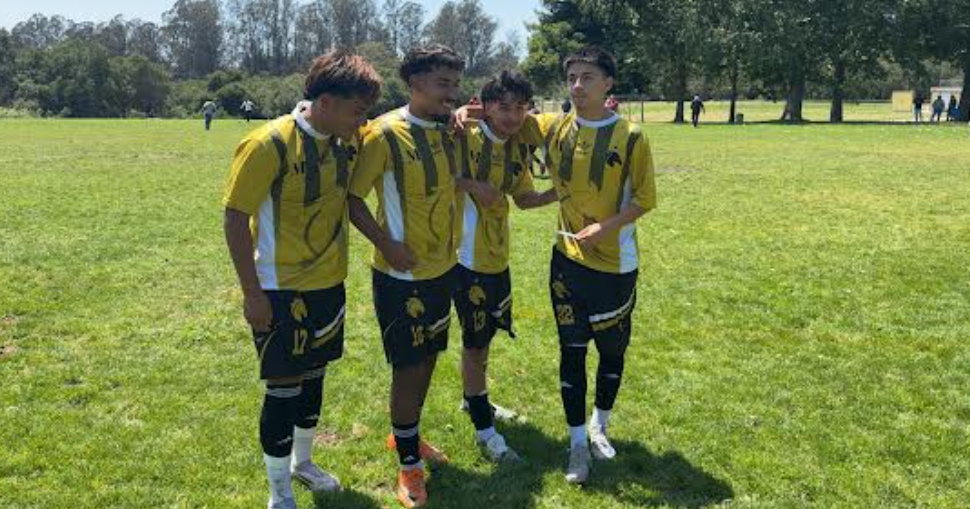
The reason it matters. Kids and their friends, every Sunday. Fabian isn’t protecting a lake. He’s protecting the next game.
What's Next
What we need next is narrative: Bernie's otters running out of space to rest. Madisyn's missing ducks and polluted lake. Fabian's Sunday games. Kassy's neighborhood waking up in the mud. Every one of these is giving us a specific character, person or animal, in a specific place, with something changing around them. The stories are unfinished. The work now is to go back, ask deeper questions, and keep paying attention to the places these students already care about.
The next assignment is to spend more time with the places in the photos. Where do the otters go when the rock disappears? What did Pinto Lake sound like when Madisyn was little, and what does it sound like now? Who lives near the water line on Salinas Road? Who lost work when the flood came? Did they ever get their jobs back?
Students will return to these places and meet the people already working on the issues they identified: organizations restoring habitat, helping families recover, cleaning up lakes, and preparing for future floods.
For these students, parts of the future climate are already here.
Pájaro Valley Climate Stories is a student environmental storytelling program: a collaboration between PVUSD, the Center for the Study of the Force Majeure at UCSC, and Virtual Planet Technologies. Photos and words by PVUSD students. Published with their teachers' permission as part of the spring 2026 workshop series.
Read Also
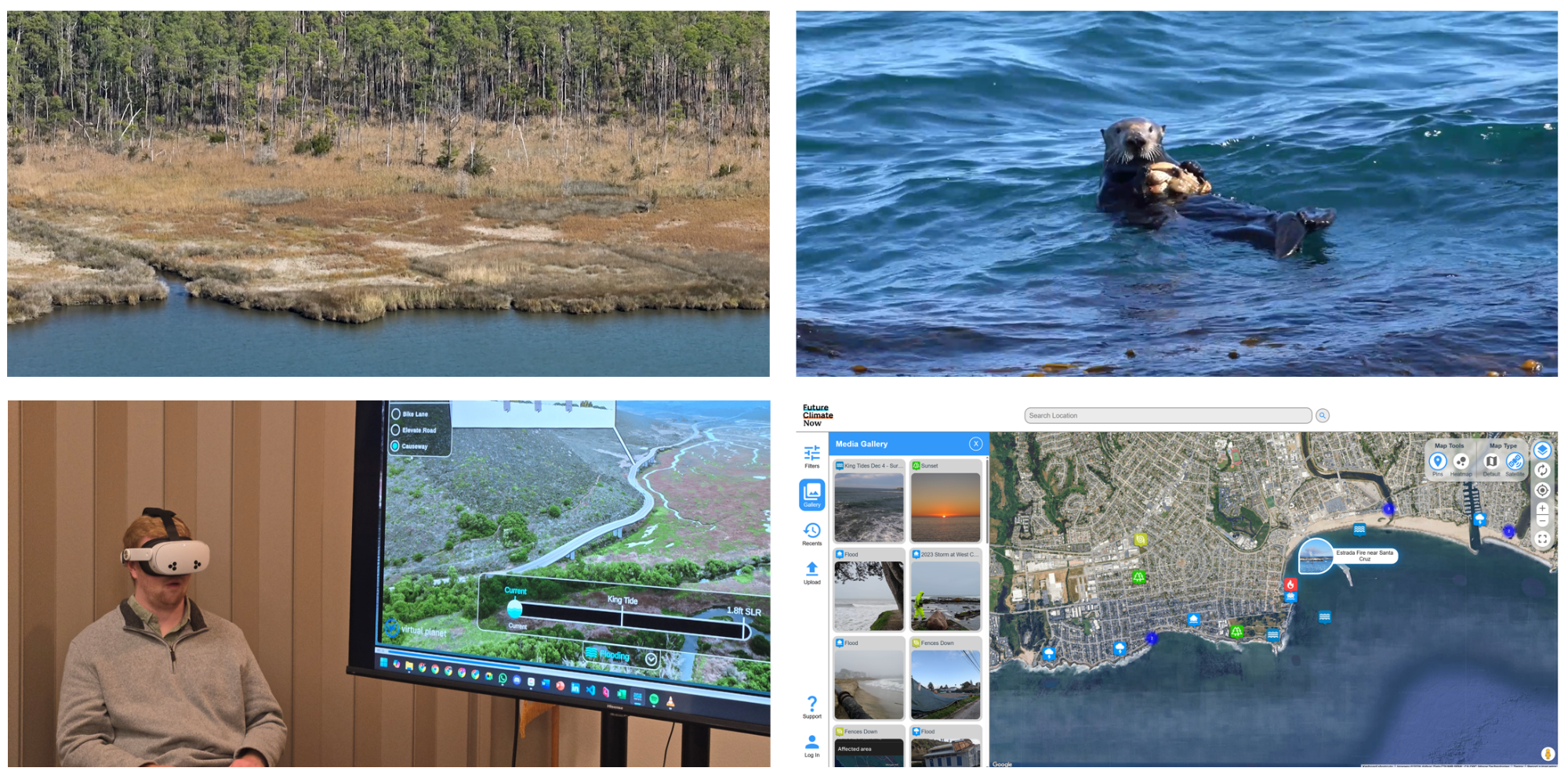
Three Coastlines, a New Platform and a Free Video
New experiences, Future Climate Now, and a question for you.
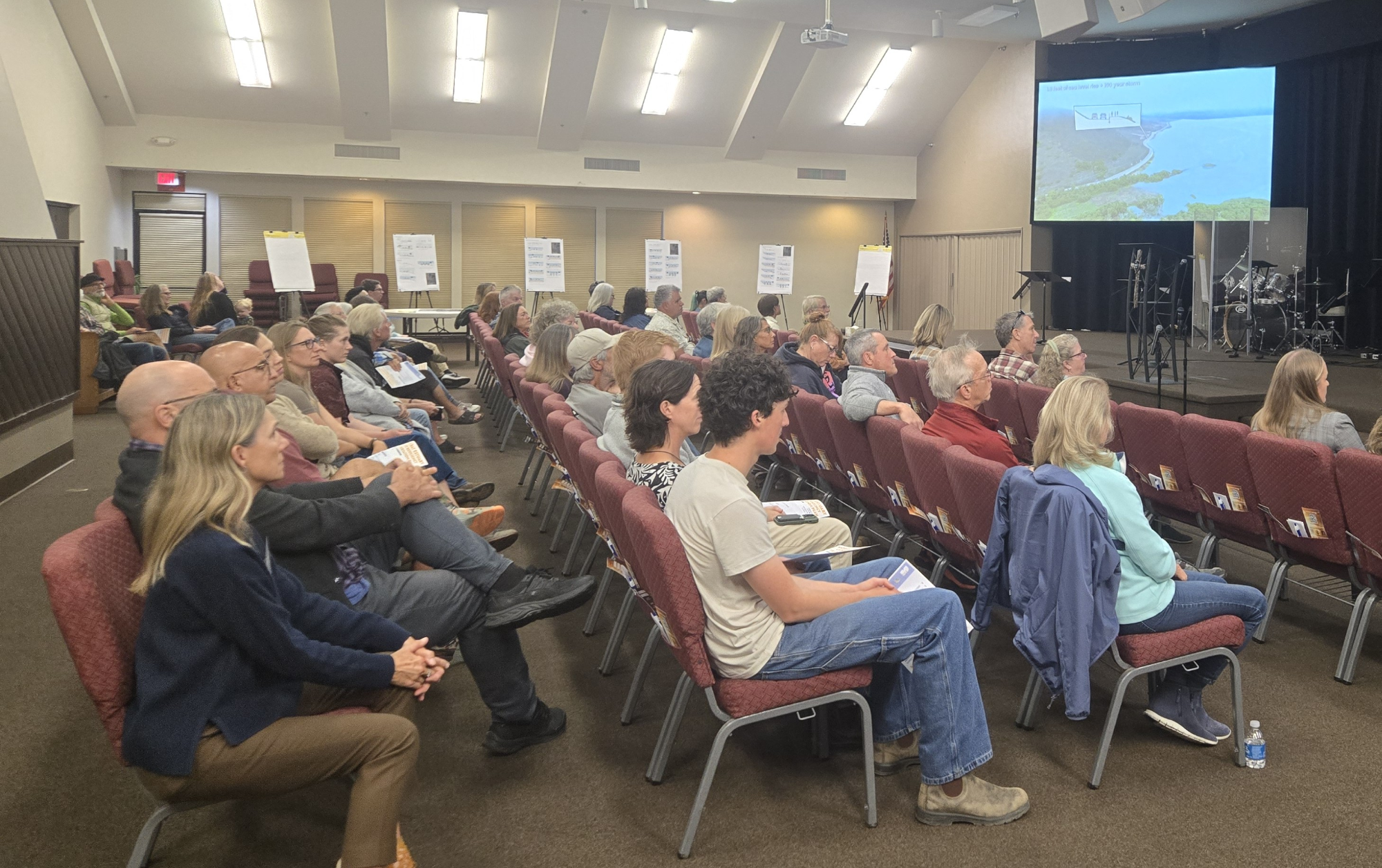
What We Learned When People Stopped Paying Attention
A 2025 recap from Juliano Calil on how immersive engagement shifted from novelty to practical tool, based on real-world climate and resilience projects. Lessons on attention, storytelling, and why immersive tools now need to deploy fast, stay grounded in place, and drive action.
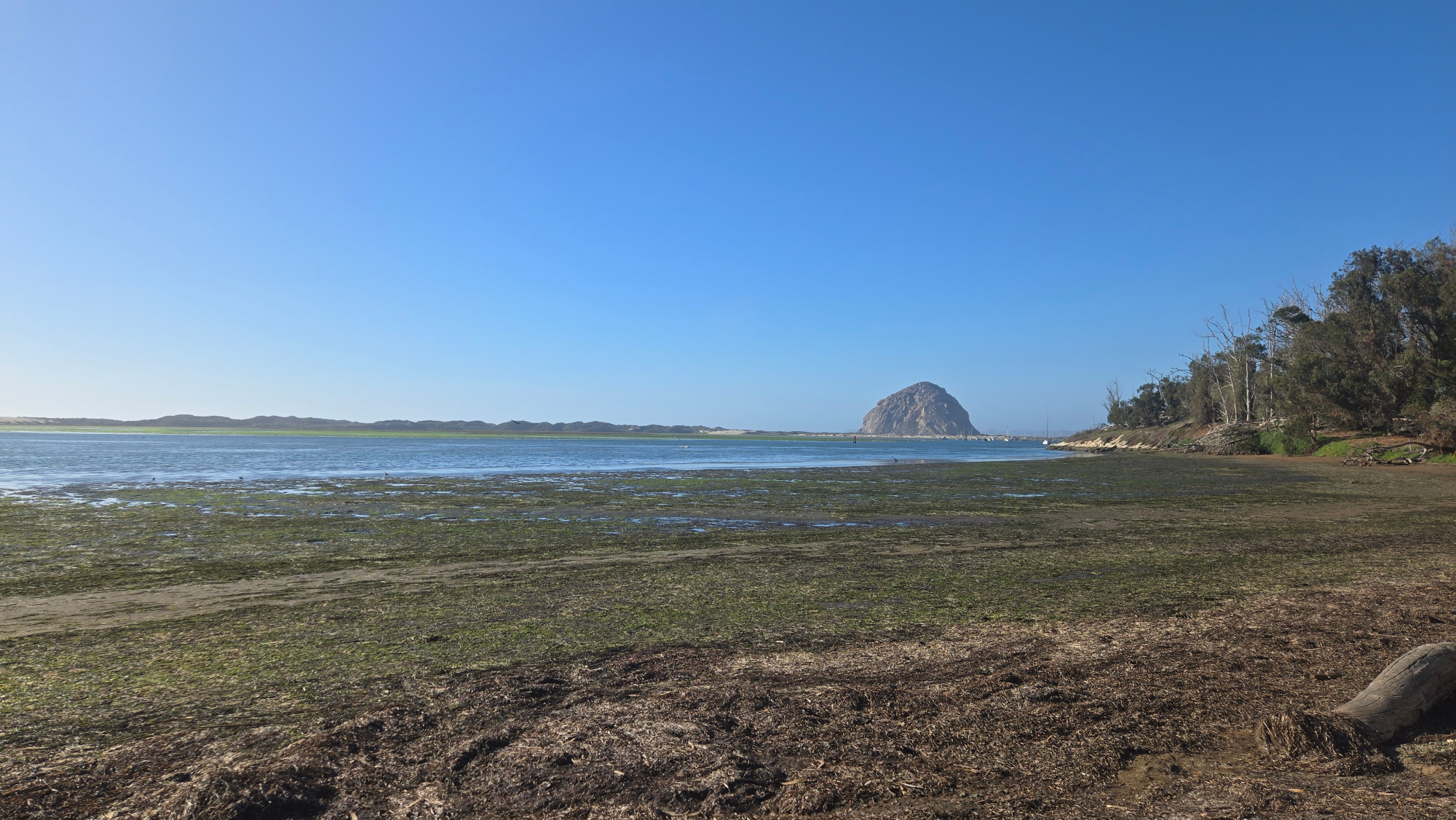
Virtual Planet FAQ: Climate Visualization & Immersive Storytelling
Answers to the most common questions about Virtual Planet's work.
🎥 Behind the Headsets: Immersive Climate Stories for Coastal Resilience
Co-creating across coasts to transform data into experience.